Career switch after 30: how studying abroad helps you start over

Many people believe their 30s are too late for big changes. By now, you might feel you should already have a steady job and clear plans. In reality, life is often less predictable.
Your early thirties have real advantages. By this point, you have worked in your field, not just thought about it in school. You know what kind of work energises you and what wears you out. Maybe you had a job with a great title, but found out that doesn’t always mean a happy life.
This experience is helpful if you study again. You choose a new direction because you truly want change, not just because it looks good on paper. This sense of purpose helps students over 30 stay focused, take part in class, and get the most from their program. You are not just the “old one”; you are the one who knows exactly why you are there.
How studying abroad supports a career reboot.
International programs offer more than classes. They provide time, structure, and a new environment to help you grow.
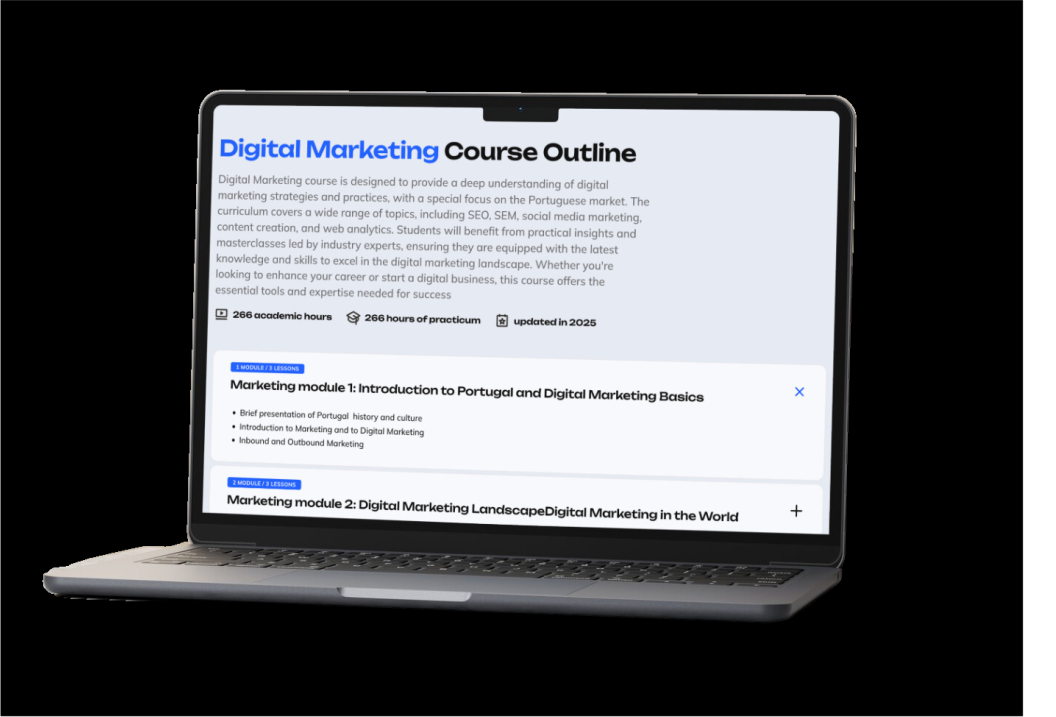
One obvious benefit is learning new skills. In programs such as digital marketing, design, data, or project management, you follow a clear curriculum. You work on projects, use industry tools, and get feedback from experienced teachers. When you finish, you have both a qualification and real projects you can show in job applications. No more “I watched a course once on YouTube” on your CV.
The people you meet are just as important. Your classmates, teachers, and guest speakers become your new professional network. You learn with people from different backgrounds and careers. Some are changing direction like you; others are building on what they already do. Conversations over coffee and group work often lead to ideas and opportunities you would not find on your own.
This is especially useful if you’re changing careers. When you start looking for jobs in your new field, you already know people in the industry and the country. They’ve seen your work and your progress, which is much better than sending a cold email.
The “hidden curriculum”: confidence, resilience, and a new story.
Studying abroad offers more than just coursework. It also includes everything you experience outside the classroom.
You move to a new place, figure out public transport, open a bank account, find housing, and deal with paperwork, sometimes in a language you are still learning. You work in teams with people who think and communicate differently. You solve small problems almost every day, from “Where do I print this?” to “Why does this office close at 3 p.m. on a Tuesday?”
At first, these things might feel tiring instead of exciting. But over time, they change how you see yourself. You go from thinking you avoid change to realising you can adapt and succeed in a new place.
When you interview later, this becomes part of your story. You are not only a career changer; you are someone who deliberately left a safe but unsatisfying job, learned new skills, and rebuilt your life somewhere new. This shows commitment and adaptability, qualities employers often value more than a perfectly linear path.
Things to think about before you study abroad.
Studying abroad after 30 is a big decision. Take time to think honestly about a few key questions before you apply, so you can make the best choice.
First, what do you really want to change? Is it just your field, or also your country, language, and lifestyle? Do you want to stay and work where you study, or return home with a stronger profile and a new qualification?
Second, can you realistically afford at least one academic year? Plan for tuition, rent, food, health insurance, transport, and some extra for surprises. Many students work part-time, but it is safer to see that income as support rather than a main source. Look for scholarships from universities and international organisations, as well as grants or fellowships in your field. Planning your savings and understanding local living costs can make the move much less stressful.
Third, does the program format fit your life? Full-time study helps you focus but leaves little room for work. Part-time or blended programs are more flexible but need more self-motivation. If you have a partner or children, it is important to talk openly about schedules, responsibilities, and support before you move. A time zone change can be easier than a “who does the dishes now?” change.
Careful planning does not guarantee certainty, but it makes your move more confident and calculated.
Making the most of your “student again” phase.
If you study abroad, treat this time as the start of your new path, not just a break from your old one.
Show up to classes prepared, ask questions, and take chances to present your work. Use your strengths to help classmates and let them help you in return. Go to events, talks, or meetups, even when staying home feels more comfortable. Share your projects on LinkedIn and connect with teachers, classmates, and guest speakers while you are still studying, not only after you graduate.
These small actions add up. By the end of the program, you will likely have more than a qualification. You will have a clearer career story, a portfolio that shows your new direction, and a network in your chosen country and field.
You are not starting from zero.
Changing careers after 30 can feel like starting over. Going from seniority to being a beginner again is uncomfortable, but it’s part of real growth.
You are not starting from scratch, though. Past jobs, even in other fields, taught you how to work with others, meet deadlines, handle clients, solve problems, and manage stress. Studying abroad builds on these skills. It adds new abilities, international experience, and a space to shape your next chapter.
An international program is not a fix-all, but it provides structure and support to help you reboot your career with confidence. Most importantly, it shows that real change after 30 is not only possible; it can be the beginning of a much more fulfilling chapter.