Professional Courses for Foreigners in Portugal: Upskilling for Spouses in 2026

Relocating to Lisbon, Porto, or the sunny Algarve as a trailing spouse often begins with a honeymoon phase of pastel de nata and seaside walks. However, the reality of the Portuguese labor market in 2026 quickly sets in. Whether you arrived via a D7, Digital Nomad, or a Work visa under your partner's sponsorship, professional stagnation is a common risk. The local job market has matured significantly, and employers now prioritize specific technical competencies over generalist backgrounds. For many expats, the most efficient path to re-entry isn't a four-year degree, but intensive professional courses for foreigners in Portugal that align with local DGERT standards.
The 2026 Legal Landscape for Foreign Trainees
Before selecting a curriculum, you must understand the current regulatory framework. As of September 2026, the legal environment for foreigners has undergone structural shifts. Following the legislative changes promulgated on August 31, 2026, which amended Lei 23/2007, the relationship between vocational training and residency has been decoupled. Specifically, the former Article 92, paragraph 4, has been revoked. This means that enrolling in a professional course—even one certified by DGERT—no longer serves as a bridge to a new Residency Authorization (AR) for those without a prior legal status.
For spouses already holding a residence permit for family reunification (Art. 98-D), this change is less about legal status and more about compliance and quality. We at Facultét emphasize that while these courses no longer provide a path to residency for those arriving as tourists (a route closed since the abolition of Manifestation of Interest in 2024 via Lei 9/2024), they remain the gold standard for employability. If you are here on a Temporary Stay Visa (E9) under Art. 54, remember that according to AIMA, this visa allows for a stay of up to one year, but it is crucial to note that it does not convert to an AR, does not count toward the five-year residency requirement for citizenship and does not permit professional activity. It is crucial to read more about what changed in the Foreigners Law in 2026 to ensure your educational path aligns with your long-term residency goals.
Why DGERT Certification Matters for the Portuguese Market
In Portugal, the Direção-Geral do Emprego e das Relações de Trabalho (DGERT) is the entity that certifies training providers. For a foreigner, a certificate from a DGERT-certified entity like Facultét is not just a piece of paper; it is a signal to Portuguese HR departments that the training meets national quality standards (Sistema Nacional de Qualificuções). In a market where trust and formal recognition are paramount, having a DGERT-certified course on your CV helps bypass the skepticism often directed toward foreign, non-equivalated diplomas.
Furthermore, training costs with certified entities can often be deducted from personal income tax (IRS) under the education category, provided you have a Portuguese NIF and are a tax resident. According to the Portal das Finanças, education expenses are deductible at a rate of 30%, up to a limit of €800 per household, though you should verify specific 2026 thresholds based on your income bracket.
High-Demand Specializations for Re-entry in 2026
The Portuguese economy in 2026 is heavily focused on digital transformation and sustainable growth. For spouses looking to pivot, three areas stand out as particularly "expat-friendly" due to the high prevalence of English-speaking roles and competitive salaries.
1. Data Science and Analytics
Lisbon has solidified its status as a European tech hub. Companies ranging from startups in Hub Criativo do Beato to multinationals in Parque das Nações are desperate for professionals who can interpret consumer behavior. If you have a background in business or social sciences, a course in Data Science: Machine Learning, Artificial Intelligence & Marketing Analytics can bridge the gap between your previous experience and the current technical requirements of the market. Data roles in 2026 typically start at €35,000 annually, significantly above the national average, according to IEFP job market reports.
2. Digital Marketing and Growth
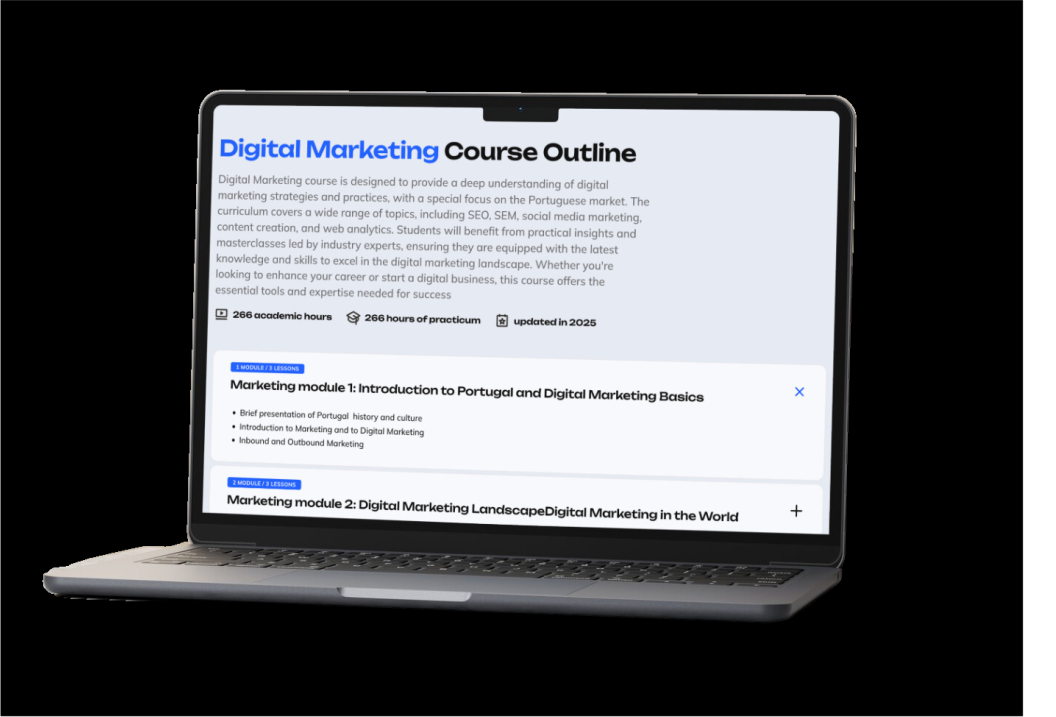
For those with a creative or communications background, the shift to e-commerce is inescapable. A Digital Marketing certification allows you to leverage your native language skills—often a massive asset for Portuguese companies looking to export to the US, UK, or German markets—while mastering the technical aspects of SEO, SEM, and performance tracking.
3. Project Management
With the influx of EU recovery funds and large-scale infrastructure projects, organized oversight is in high demand. A professional course in Project Management equips you with the methodologies (Agile, Scrum, Prince2) recognized by the Portuguese business community. This is particularly effective for spouses who previously held management roles in their home countries but need to "portugualize" their credentials.
Navigating the Financials: Salaries and Costs in 2026
It is vital to manage expectations regarding the local economy. As of January 2026, the national minimum wage (Salário Mínimo Nacional) stands at €920 per month, paid 14 times a year (totalling €12,880 annually), as confirmed by Social Security (Segurança Social) updates. However, skilled professionals who complete specialized professional courses for foreigners in Portugal can expect to command significantly higher salaries.
- Junior Data Analyst: €1,800 - €2,400 per month.
- Digital Marketing Specialist: €1,500 - €2,100 per month.
- Junior Project Coordinator: €1,600 - €2,200 per month.
While these figures are lower than in London or New York, the cost of living—though rising in areas like Arroios or Matosinhos—remains manageable if you are earning in the skilled bracket. We at Facultét recommend budgeting approximately €1,200 to €2,500 for a comprehensive 3-6 month professional certification, which often includes career coaching and networking opportunities with local recruiters.
Steps to Professional Re-entry
- Validate your Status: Ensure your NIF (Número de Identificação Fiscal) and NISS (Número de Identificação da Segurança Social) are active. You cannot legally work or benefit from tax deductions without them.
- Assess Language Needs: While many tech roles are English-centric, reaching a B1 level in Portuguese greatly expands your options in traditional sectors.
- Choose DGERT-Certified Training: Avoid unaccredited workshops. Focus on programs that align with the QNQ (Quadro Nacional de Qualificações) standards.
- Network Locally: Use your time during the course to join local hubs like Fintech House or Startup Lisboa. In Portugal, the "hidden job market" accounts for over 60% of placements.
The journey from an accompanying spouse to a thriving professional in Portugal requires a strategic shift. By leveraging DGERT-certified professional courses, you transform your "gap year" into a calculated career pivot. Don't let your skills stagnate while you wait for paperwork; the 2026 market rewards those who arrive with local certifications and a readiness to adapt.
Frequently asked questions
Do professional courses in Portugal grant a residence permit in 2026?
No. Under the amended Lei 23/2007 (promulgated August 31, 2026), professional and vocational courses (DGERT) no longer provide a path to a Residence Authorization (AR) for those entering as tourists. The previous Art. 92 п. 4 has been revoked. According to the current law, an AR for study purposes requires a prior residence visa under Art. 62 and is generally restricted to ensino secundário or level 4 courses (ISCED 4).
Can I work while taking a professional course as a foreigner?
If you already hold a residence permit for family reunification (Art. 98-D) or a work-based AR, you have full rights to work. However, if you are on a Temporary Stay Visa (E9) for study purposes under Art. 54, you are not permitted to engage in professional activity in Portugal.
What is the minimum wage in Portugal for 2026?
The minimum wage is €920 per month, paid 14 times a year. This is the baseline for all legal employment contracts in Portugal as of 2026, as regulated by the Portuguese government.
Are DGERT courses recognized outside of Portugal?
DGERT certification is a national Portuguese standard. However, because it aligns with the European Qualifications Framework (EQF), the skills and credits earned are often highly regarded and easily understood by employers across the European Union.
Is the NHR tax regime still available for new residents?
The original NHR regime closed to new applicants in 2024. In 2026, new arrivals may qualify for the IFICI (the new tax incentive for scientific research and innovation), which targets specific high-value-added roles. Consult the Portal das Finanças for eligibility requirements.
Ready to restart your career in Lisbon or Porto? Explore our Project Management program or speak with a career consultant at Facultét to find the right path for your background. Your professional re-entry starts with the right local credentials.
Data verified as of 2026-09-29.