Winter in Portugal: What to Expect

It's 7:30 PM in Lisbon. You check your weather app: 13°C. You've lived through worse.
You get home, take off your shoes and jacket, but five minutes later, you put your jacket back on. Now, you're at your desk, studying in a puffer coat like it's nothing out of the ordinary.
Winter in Portugal isn't harsh outdoors, but inside, especially in older apartments, it often feels cold and uncomfortable due to damp air, cold tiles, and drafty windows. The real problem is the apartment, not the weather.
If you come from a place with real winter, like Russia, Ukraine, Canada, or Northern Europe, this feels strange. 13°C outside seems fine, but being cold at home just feels wrong. At home, the streets are harsh but the apartment is warm. Here, it's the opposite: mild outside, but still uncomfortable indoors.
If the outdoors feels manageable, you might wonder: when does winter actually hit you in Portugal?
In most places, the winter vibe shows up from late November through early March, with the coldest stretch usually in January and February.
The numbers look mild:
- Lisbon: often around 8–16°C, with nights dipping into single digits.
- Porto: often around 6–14°C, usually wetter, with colder-feeling evenings.
The temperature itself isn't surprising. What really gets me is how cold a home feels when it's damp and full of cold surfaces.
It's not the forecast. It's the apartment.
Lisbon's winter often lands in the "hoodie weather" range. Porto is usually cooler and noticeably wetter. When you're walking around, grabbing groceries, heading to class, most days are manageable.
The discomfort starts as soon as you stop moving. When you sit down to study, your feet go numb on the tile, the air feels heavy, and your hoodie isn't enough anymore.
People describe it differently depending on where they're from:
- Eastern Europe: you're not scared of the cold, you're irritated by cold walls and floors.
- Brazil / Mexico / India: the shock is needing a warm jacket and indoor slippers in the same week.
- UK / Netherlands / Ireland: rain is familiar; the indoor chill isn't.
- Nordics: not freezing, just the kind of cold that sticks around for hours.
No matter where you're from, everyone agrees: it's about the conditions inside.
This contrast raises a question: why does it feel colder than expected indoors?
A typical Portuguese apartment can lose comfort fast for three simple reasons:
Humidity. Damp air makes everything feel colder. It also creates the classic winter scene: condensation on the inside of the windows, laundry that never fully dries, and that "cold" feeling even when the temperature looks okay.
Drafts. Tiny gaps around windows and doors don't look dramatic, but you feel them all evening. If air is moving, warmth disappears.
Tile and cold surfaces. The tile looks nice, but it pulls heat from your body right away. The floor doesn't care what your weather app says.
With these indoor challenges in mind, it helps to focus not on heating the whole apartment, but on three strategies: reducing heat loss, lowering dampness, and making one area comfortable. Doing this will improve your winter experience beyond simply checking the outdoor temperature.

What locals do (without making a big deal out of it)
There's a quiet rhythm most people follow:
- Daytime: open shutters/curtains when the sun is out. Take the free warmth.
- Early evening: close shutters before you're cold. The difference is bigger than you'd expect.
- Feet: nobody walks barefoot on tile all winter. Slippers aren't a personality trait; they're just practical.
A warm-up plan that works in most rentals
Start with drafts. Do a quick hand test near windows and doors. If you feel air movement, that's your main comfort problem.
Easy fixes include weatherstripping tape, a draft stopper, or even a rolled towel at the door. It isn't fancy, but it works. You'll find these at supermarkets, Leroy Merlin, or local hardware shops.
Add softness where you actually live. Winter isn't the time for bare floors. Put something between you and the cold surfaces, like a rug under your desk chair, a blanket on the couch, or thicker curtains at night.
Many international students laugh at the idea of wearing slippers at home, but most change their minds within a week.
Treat humidity like part of your routine. A common mistake is leaving a window slightly open all day for "fresh air." It cools the walls, but doesn't really fix the moisture.
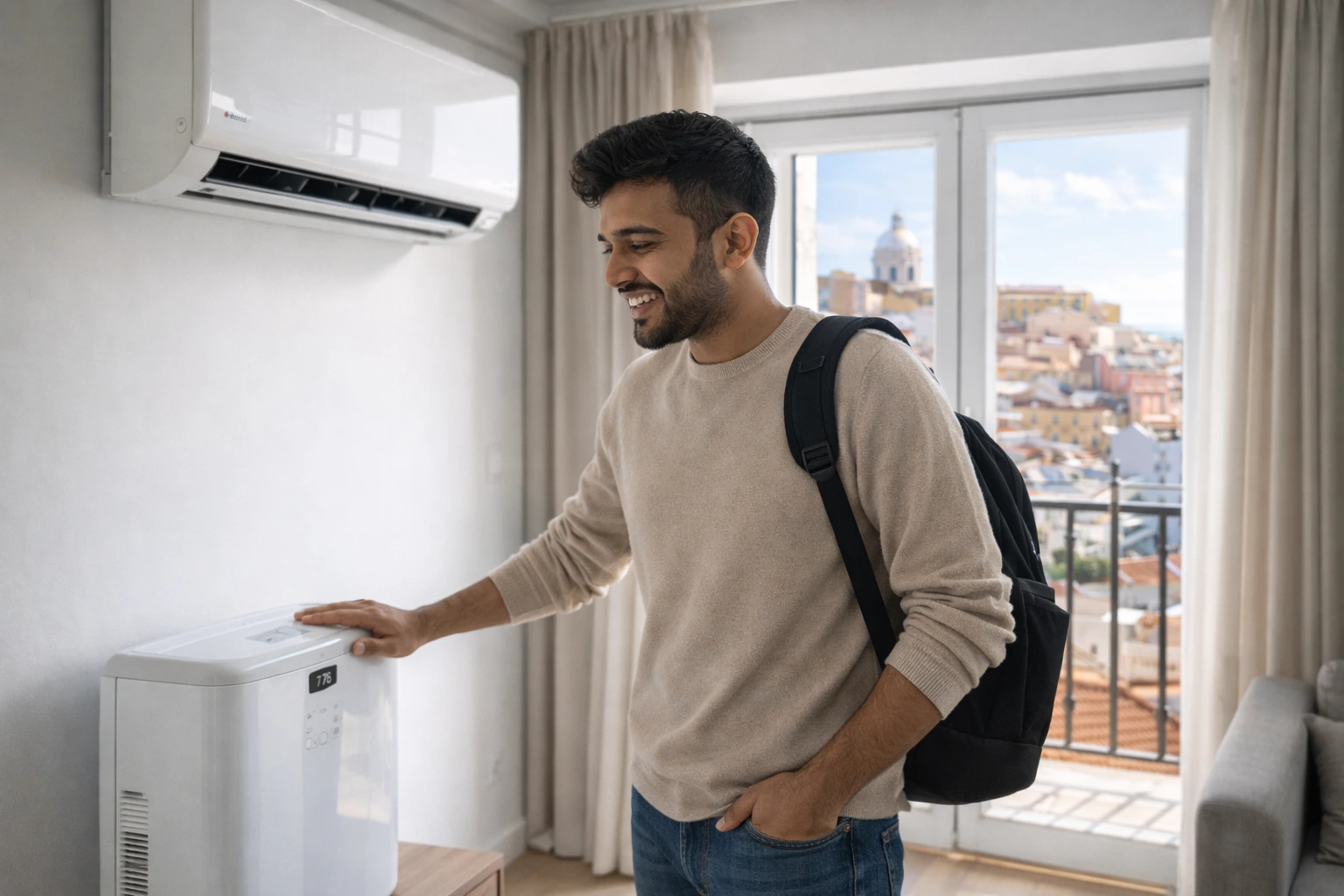
Better: ventilate in short bursts. Open windows wide for a few minutes (even better with cross-ventilation), then close everything and keep warmth in.
If your windows are wet every morning or laundry takes forever, a dehumidifier can change the whole experience without making the room "hot." For a small room, you usually want a size/capacity that actually matches the space (too small and it runs forever). Budget-friendly options are often in the €50–€150 range, and you'll see plenty of models at places like Worten.
A small humidity meter helps too. It turns "I feel awful" into "okay, humidity is high again."
Don't try to heat the whole apartment. Choose one warm spot as your base.
If your place is big, drafty, or shared, you'll get better results by choosing one "base" area: the spot where you study, work, and reset.
Close the door if you can. Keep the soft layers there. Protect that zone.
It's like the difference between trying to warm the whole ocean and just warming a mug of tea.
The takeaway for students: prioritize housing that allows you to focus and feel comfortable, rather than striving for perfection.
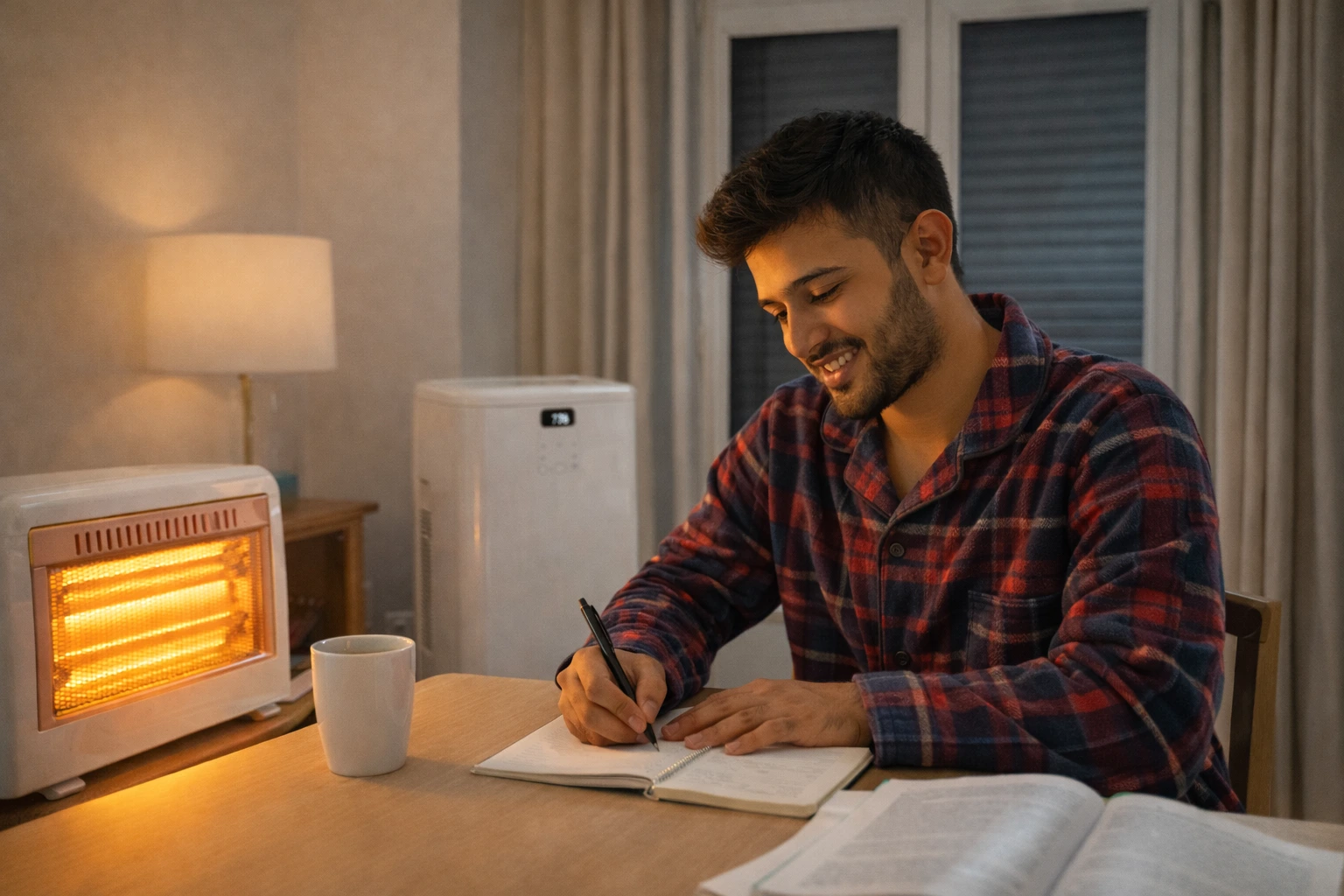
Heating in Portugal: what you'll actually find (and what it costs)
Most homes here aren't set up to heat every room all day. Many rentals, especially older ones, only have limited or "room by room" heating.
What students usually deal with:
AC with heat mode (heat pump). This is common in newer places. If you have it, it's often the best option because it's usually more efficient than a standard electric heater.
Portable electric heaters. They're fast and simple, but using them for hours is the easiest way to run up your bill.
Gas bottle heaters. Some homes still use these. They heat quickly, but you need to ventilate and follow basic safety rules.
Central heating exists, but in many student apartments, it's not the standard.
The money part (rough, but useful). Electricity prices depend on your provider and plan, but many people see something like €0.20–€0.30 per kWh.
So, as a rough idea:
- Small heater (1,000 W) for 4 hours/day → about €24–€36/month
- Bigger heater (2,000 W) for 4 hours/day → about €48–€72/month
Heat one room rather than the entire apartment for better comfort and savings.
A quick safety reminder: keep heaters away from curtains and fabric, don't dry clothes on heaters, and never use an oven as a heat source. If you use a gas heater, ventilate well and consider a carbon monoxide detector.
Choosing an apartment in Portugal (so winter doesn't ruin your life)
If you can pick your place before winter, you're already ahead. Renting during the cold season can actually help, because you'll notice problems right away instead of finding them in December.
What to look at during a viewing
Windows tell you almost everything. If the windows are single-glazed, you'll usually have colder surfaces and more condensation. Double glazing makes a big difference. If there are shutters, check that they close properly.
Check corners, ceilings, and wardrobes. Look for fresh paint patches, bubbling paint, dark specks in corners, or that "cleaner + damp" smell. Open a wardrobe that sits on an outside wall. If it smells musty, winter will amplify it.
Ask where the apartment faces. South-facing light can really help in winter. North-facing ground floors might be quiet and pretty, but they can also be very cold.
Ask what's doing the heating (don't guess)"Is there heating?" is too vague. Ask:
- Is there AC with heat mode? Does it work well?
- How many units are there, and where are they?
- Are any heaters included?
- What does the winter electricity bill usually look like?
Bathroom ventilation mattersAsk if there's an extractor fan and if it vents properly. If not, you'll need to open a window after showers and keep moisture moving out, or mold will show up quickly.
Laundry reality checkIf there's no airflow, winter laundry becomes a weekly struggle. Ask where people dry clothes, and look for a balcony, a sunny spot, or at least a place that doesn't feel permanently damp.
Questions that save you later
- Any history of mold in winter?
- Do the windows get condensation in the morning?
- Are the bedrooms colder than the living room?
- Are any rooms on an outside corner of the building?
- Is the apartment on the ground floor?
Here's a simple tip: if you can, visit the apartment on a damp day or in the late afternoon. Sunny mornings can hide problems, but grey weather shows what's really going on.
What I'd do this week (fast, realistic)
If I moved into a Lisbon or Porto apartment tomorrow and wanted to feel better immediately:
- Block drafts at the door and one main window.
- Add a warm surface where your feet live (a rug or thick blanket).
- Ventilate in short bursts and treat humidity as a real variable; use a dehumidifier if condensation keeps coming back.
Fix obvious problems, make small changes that improve comfort, and focus on making your main living area warm and inviting.